

In the architecture of power-dense electric motor solutions, every component is optimized for performance within a constrained volume. The switching frequency of a BLDC motor controller is a fundamental parameter that directly influences this balance of size, efficiency, and control fidelity. We will analyze the core reasons why elevated switching frequencies are not merely a specification but a critical enabler for advanced motor drive systems.
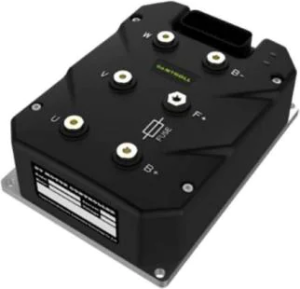
Refining Torque Precision and Smooth Operation
A primary advantage of a high-frequency motor controller is the substantial improvement in torque control and acoustic performance. The controller generates a pulse-width modulated (PWM) signal to approximate a smooth AC waveform for the motor. A higher switching frequency means more pulses per second, resulting in a synthesized output that more closely resembles a pure sine wave. This refinement reduces torque ripple, which is the minute variation in output torque that can cause vibration and audible noise. For applications requiring smooth motion at low speeds, such as in precision automation or medical devices, this is a critical attribute. The electrical waveform produced by the motor controller becomes cleaner, leading to mechanically superior performance from the motor.
Enabling Miniaturization through Thermal Management
The pursuit of power density—delivering high power from a small package—is a central challenge in modernelectric motor solutions. A higher switching frequency allows for the use of smaller passive components, particularly the inductive filters and capacitors in the output stage. However, this benefit introduces a thermal trade-off: each switching event incurs a small amount of power loss. While the loss per switch is minor, a higher frequency increases the cumulative switching losses, generating more heat within the semiconductor devices. Therefore, advancing power density is not solely about pushing frequency higher; it is about sophisticated thermal design and selecting semiconductor materials that can operate efficiently at these elevated frequencies. This balance is what allows a compact Santroll motor controller to deliver robust power without compromising reliability.
Expanding Bandwidth for Enhanced Dynamic Response
The control loop of a motor controller must constantly adjust its output to maintain the target speed or torque despite changing loads. The speed at which this loop can react is its bandwidth. A fundamental rule of control theory dictates that the switching frequency must be significantly higher than the desired control bandwidth to allow for stable and rapid correction. A high switching frequency provides the headroom needed for a high-bandwidth controller. This results in a system that responds more quickly to command changes and rejects load disturbances more effectively. For dynamic applications like robotic joints or traction drives that require instant adjustments, this enhanced responsiveness is a key performance differentiator.
The implementation of high-frequency switching in a BLDC motor controller is a deliberate engineering compromise. It trades the challenge of managing switching losses for substantial gains in control smoothness, component miniaturization, and system responsiveness. This technical approach is integral to developing the power-dense electric motor solutions that modern compact machinery demands. At Santroll, our design philosophy addresses these interlinked factors, ensuring our controllers provide the precise, quiet, and dynamic performance that advanced applications require.