

Shipbuilding operates under a unique set of physical and regulatory constraints that standard, off-the-shelf components frequently fail to meet. At Santroll, we observe that marine engineers consistently gravitate toward custom marine motors, and this preference is rooted in practical necessity. The decision is driven by the imperative to achieve compatibility with stringent safety standards, severe environmental conditions, and the specific spatial and power profiles of a vessel.
Addressing Corrosion and Harsh Environmental Resistance
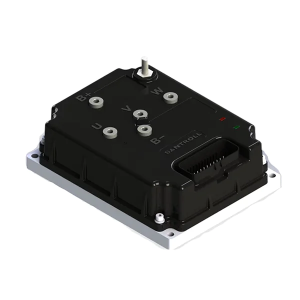
The marine atmosphere presents one of the most aggressive environments for electrical equipment. Salt spray, constant humidity, and wide temperature fluctuations demand materials and construction methods beyond typical industrial standards. A custom marine motor is engineered with this in mind. This involves specifying specialized seals, corrosion-resistant coatings on all external surfaces, and utilizing stainless steel or plated hardware. The integration of a motor controller must also follow this principle, requiring conformal coated circuit boards and robust environmental sealing to prevent salt fog intrusion, which can lead to premature failure. A standard motor and a standard BLDC motor controller lack these specific protections, resulting in a significantly reduced service life and reliability at sea.
Optimizing for Space Constraints and Unique Power Requirements
The architecture of a ship is defined by severely limited and irregularly shaped spaces. A custom marine motor can be designed to fit within these specific spatial envelopes, whether it is a long, thin motor for a thruster tunnel or a compact, high-torque unit for a winch application. This customization extends to the power system. The motor controller must be matched to the motor’s unique voltage, current, and torque characteristics, which are often tailored for high starting torque or specific speed ranges essential for marine propulsion and auxiliary systems. An off-the-shelf BLDC motor controller might not offer the parameterization or form factor needed, whereas a customized unit ensures optimal performance within the physical and electrical constraints of the vessel.
Ensuring Regulatory Compliance and System Integration
Marine applications are governed by a strict framework of international and class society rules, such as those from DNV, ABS, or Lloyd’s Register. These standards dictate requirements for insulation, electromagnetic compatibility, and failure modes. A custom marine motor is developed and certified to meet these standards from the outset. Furthermore, a vessel operates as a single, complex system. A custom motor and its paired motor controller can be designed for seamless integration with the ship’s power generation system, control network, and monitoring interfaces. This level of integration, often requiring specific communication protocols and data outputs, is seldom achievable with standard catalog products.
The preference for custom marine motors within shipbuilding is a direct response to the sector’s uncompromising demands. It is a strategy that prioritizes long-term operational integrity over short-term acquisition ease. By selecting motors and a corresponding BLDC motor controller that are specifically engineered for the marine environment, spatial challenges, and regulatory landscape, shipbuilders mitigate risk and enhance vessel capability. We support this approach by providing motor controller solutions that are tailored to complement these specialized motors, ensuring that the entire drive system is purpose-built for the rigors of the sea.