

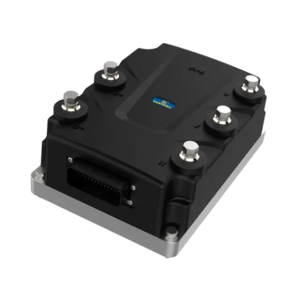
Non-road electric vehicles, from agricultural harvesters to industrial forklifts, operate under a set of demands distinct from their on-road counterparts. The core of their operational capability frequently rests on the performance of the AC motor controller. This component acts as the central nervous system for the vehicle’s propulsion and auxiliary functions. We will examine how a sophisticated motor controller manages torque, enhances efficiency, and provides the precise control needed for specialized off-road applications.
Managing Torque and Traction in Demanding Environments
A primary function of the AC motor controller in a non-road EV is the precise management of torque. Unlike constant-speed applications, these vehicles require instant, high torque at low speeds for tasks like climbing steep inclines or pushing through heavy soil. The motor controller delivers this by accurately regulating the power supplied to the motor. It provides high current at low RPMs, ensuring the vehicle has the necessary traction and power without stalling. This precise torque control also mitigates wheel slip on loose surfaces by managing power application smoothly, protecting the drivetrain from jarring shocks and extending the life of mechanical components.
Optimizing Energy Usage for Extended Operational Periods
For electric machinery, operational runtime is a critical metric directly linked to energy efficiency. The AC motor controller is instrumental in conserving battery capacity. It achieves this through advanced control algorithms that adjust the motor’s power draw in real-time based on the immediate load demand. When a vehicle is cruising or under a light load, the controller reduces energy output, thereby conserving power. Furthermore, most modern systems incorporate regenerative braking, a process where the motor controller reverses its role during deceleration, acting as a generator to convert kinetic energy back into stored electrical energy. This cycle of intelligent power management and reclamation is vital for maximizing the work achievable within a single battery charge.
Ensuring System Durability and Operational Reliability
The operating environment for non-road EVs is often harsh, involving vibration, moisture, and significant temperature fluctuations. The role of the AC motor controller extends beyond performance to ensuring system resilience. It continuously monitors parameters like motor temperature and current flow. If it detects an overload condition or a risk of overheating, it can proactively derate the power output or trigger a safety shutdown to protect both the motor and the controller itself from damage. This protective capability is crucial for preventing costly downtime and repairs in remote or demanding industrial settings. The robustness of the AC motor controller is a direct contributor to the vehicle’s overall reliability and total cost of ownership.
The AC motor controller is far more than a simple power switch. In the context of non-road electric vehicles, it is the key component that translates electrical energy into controlled, reliable, and efficient mechanical work. Its ability to deliver precise torque, optimize energy consumption, and protect the powertrain system defines the capabilities of the vehicle itself. At Santroll, we engineer our motor controller units to meet these rigorous demands, providing the intelligence and durability that modern off-road electric applications require. The right controller does not just power a vehicle; it unlocks its full potential.