

Modern industrial applications increasingly demand motion solutions that offer greater longevity, efficiency, and control. The shift from brushed to brushless electric motor technology represents a significant response to these requirements. The advantages of a brushless electric motor are rooted in its fundamental design, which eliminates a primary source of mechanical wear and enables more sophisticated management of performance.
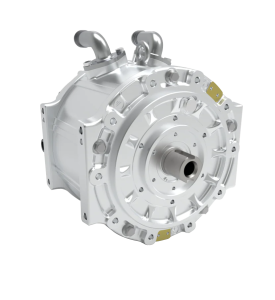
Enhanced Efficiency and Thermal Performance
A primary benefit of the brushless electric motor is its superior electrical efficiency. Traditional brushed motors require physical contact between carbon brushes and a commutator to transfer power, an interaction that creates constant friction. This friction results in energy loss, manifesting as heat and particulate wear. In a brushless electric motor, this mechanical commutation is replaced by an electronic controller. Without sliding contact, losses from friction are virtually eliminated. This allows a greater proportion of electrical input energy to be converted into useful mechanical work. The resulting higher efficiency also translates into cooler operation, which reduces thermal stress on insulation and bearings, thereby extending the motor’s service life.
Increased Durability and Reduced Maintenance
The absence of brushes is the most direct contributor to the robustness of a brushless electric motor. Brushes are consumable parts that gradually wear down and require periodic inspection and replacement. This necessity for maintenance introduces downtime and associated costs. Furthermore, the arcing that occurs between the brushes and commutator can generate electromagnetic interference (EMI), which may disrupt sensitive electronics. By design, a brushless electric motor avoids these issues entirely. With no brushes to replace and no commutator to wear, the system offers a fundamentally more reliable and maintenance-free operational profile, which is critical for systems where access is difficult or downtime is costly.
Superior Power Density and Control Dynamics
The architecture of a brushless electric motor allows for a more favorable power-to-size and power-to-weight ratio. Because the electromagnets are located on the stator instead of the rotor, heat can be dissipated more effectively through the motor’s housing. This enables a brushless electric motor to handle higher power levels within a more compact frame than an equivalent brushed motor. Additionally, electronic commutation provides precise command over the motor’s torque and rotational speed. This allows for sophisticated operation, including high starting torque and accurate speed holding across a wide range, features that are essential for advanced automation and motion control applications.
The collective advantages of the brushless electric motor establish it as a functionally superior solution for a wide spectrum of industrial uses. Its design delivers tangible benefits in operational cost, reliability, and performance capability. For engineering teams, selecting a brushless electric motor is not merely a component choice but a strategic decision that impacts the efficiency, maintenance schedule, and control sophistication of the entire mechanical system. This technology provides a clear pathway to building more robust and capable equipment.