

Industrial systems rely on a consistent and reliable source of mechanical power. At Santroll, our work as an electric motor manufacturer is centered on providing this fundamental force. An electric motor operates as an energy conversion device, specifically transforming electrical supply into controlled mechanical rotation. This process is governed by well-defined electromagnetic principles that offer a dependable solution for automated motion.
The Foundation of Electromagnetic Force
The operational principle rests on the consistent behavior of electromagnetic fields. When an electric current moves through a conductor, it generates a circumferential magnetic field. If this energized conductor is then situated within a separate, fixed magnetic field, the two fields interact. This interaction produces a mechanical force, perpendicular to both the current and the field, which acts upon the conductor. In a functional motor, numerous conductors are arranged to experience this force collectively, resulting in a cumulative rotational effect, or torque. This reliable physical phenomenon is the cornerstone of every design we produce as electric motor manufacturers.
Architectural Elements for Motion
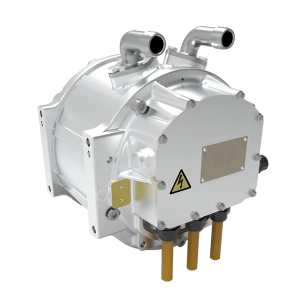
To harness this force, motors are constructed with two primary assemblies. The stator forms the stationary external structure and is responsible for generating the constant magnetic field, typically using permanent magnets or wire windings. Positioned within the stator is the rotor, the component that rotates. The rotor contains its own set of windings that become energized, turning it into an electromagnet. The resulting push-and-pull between the magnetic field of the rotating rotor and the fixed field of the stator creates continuous motion. The precise engineering of the air gap between these two components, along with the quality of materials used, are direct reflections of an electric motor manufacturer’s commitment to performance and efficiency.
Configurations for Specific Applications
In the field of motor manufacturing, diverse industrial applications demand specific torque and speed profiles, prompting the development of various motor designs. The brushed DC motor, which employs a mechanical commutation system, remains a straightforward and widely produced solution in motor manufacturing for numerous uses. In contrast, brushless DC motors—another key product of modern motor manufacturing—replace mechanical commutation with electronic control, improving longevity and reducing maintenance needs. Induction motors, commonly used with AC power and mass-produced in motor manufacturing, operate by inducing a magnetic field in the rotor without direct electrical connections. Each of these architectures offers a unique set of performance characteristics, and selecting the appropriate type is a crucial consideration in both motor manufacturing and application design.