

Grasping the function of a DC motor controller is essential for engineers focused on motion system performance. This device sits at the heart of power management, translating command signals into precise mechanical action. We at Santroll design our systems around the principle that the intelligence of a motor controller determines the efficiency and capability of the entire drive system. Let’s examine the operational layers that define a modern DC motor controller.
Defining the Core Components and Their Roles
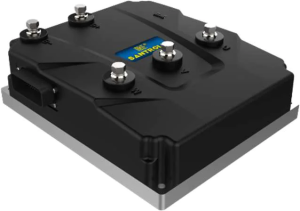
A DC motor controller is fundamentally a regulator of electrical energy. Its primary task involves managing the power delivered to a motor to achieve a desired output, such as a specific speed or position. The core components within a motor controller work in concert to execute this. These typically include a microcontroller that processes command signals, power transistors that switch the current, and a feedback loop mechanism. For a BLDC motor controller, this architecture becomes more advanced, incorporating circuitry for electronic commutation to sequentially energize the motor’s phases without physical brushes. This internal orchestration is what separates a simple power switch from a sophisticated motion management device.
The Critical Role of Feedback Systems
A fundamental aspect that elevates a basic controller is its use of feedback. An open-loop system operates without verifying its output, which can lead to performance drift under varying loads. In contrast, a closed-loop motor controller continuously monitors the motor’s actual performance through sensors, such as encoders or resolvers. This real-time data is compared against the target command, and the motor controller instantly adjusts its output to correct any error. This feedback principle is paramount in a BLDC motor controller, where sensorless techniques or Hall-effect sensors provide critical data on rotor position, ensuring smooth torque production and accurate speed regulation under dynamic conditions.
Practical Implications for System Design
The selection of a motor controller has direct consequences for system architecture and performance. A well-matched motor controller ensures operational stability, protects the motor from electrical anomalies, and enhances the overall energy efficiency of the application. Key decision factors extend beyond basic voltage and current ratings. Engineers must consider the required communication protocols for machine integration, the necessary control algorithms for the application’s precision, and the thermal management capabilities of the motor controller unit. For high-performance applications, the advanced processing capabilities of a BLDC motor controller become non-negotiable, providing the torque consistency and dynamic response needed in demanding fields like industrial automation and robotics.
The sophistication of a motor controller directly influences the intelligence of the motion system it governs. It is the decisive component that transforms electrical power into controlled, reliable, and precise mechanical work. Our engineering focus at Santroll is on developing motor controller and BLDC motor controller units that deliver this precise control, providing the foundational technology for advanced mechanical systems.