

High-speed electric motors are crucial for applications demanding rapid response and precise control. At Santroll, we focus on designing electric motor solutions, including PMSM motors, that deliver both performance and reliability. Understanding the factors that limit maximum RPM is essential for ensuring operational efficiency and preventing mechanical or thermal failure in demanding industrial environments.
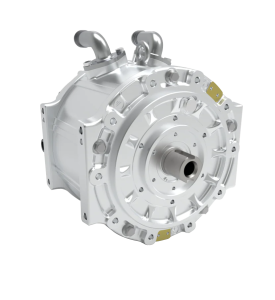
Thermal Constraints and Heat Dissipation
One of the primary factors restricting the maximum RPM of high-speed electric motors is heat generation. As rotational speed increases, electrical and mechanical losses produce heat that must be effectively managed. PMSM motors, with their permanent magnets, generate high torque densities, which can exacerbate thermal buildup if not properly cooled. At Santroll, we address this challenge through optimized winding designs, high-quality insulation materials, and efficient cooling mechanisms. Proper thermal management ensures that electric motors operate safely within their rated speed limits while maintaining long-term performance and reliability.
Mechanical Limitations
Mechanical considerations also play a significant role in limiting the RPM of electric motors. Rotor strength, bearing capacity, and vibration tolerance must all be factored into high-speed motor design. PMSM motors, in particular, require precise rotor balancing to avoid excessive centrifugal forces that could damage the motor structure at elevated speeds. At Santroll, we incorporate advanced materials and precision manufacturing techniques to enhance mechanical robustness. These measures allow our electric motors to achieve higher rotational speeds without compromising structural integrity or operational safety.
Electromagnetic Factors
Electromagnetic characteristics influence the maximum achievable RPM of high-speed motors as well. At high rotational speeds, flux weakening and back EMF can reduce the effective voltage available for motor operation, limiting performance. PMSM motors are sensitive to these effects due to their permanent magnet configuration, which must be carefully designed to balance torque output and speed capability. At Santroll, our engineering teams use simulation tools and iterative testing to optimize motor geometry, magnet placement, and winding configurations. This ensures that electric motors maintain efficiency and torque across a wide speed range without exceeding electromagnetic limits.
Operational and Practical Implications
Understanding the limitations on maximum RPM is critical for applications requiring both precision and reliability. At Santroll, we consider thermal, mechanical, and electromagnetic constraints when developing electric motor solutions, ensuring that PMSM motors perform reliably in industrial and marine applications. By carefully analyzing these factors, we provide practical guidance for motor selection, allowing clients to achieve optimal performance while mitigating risks associated with high-speed operation.
By addressing these key constraints, Santroll ensures that high-speed electric motors deliver consistent, reliable performance in demanding operational conditions. Our focus on scientific design principles and practical engineering solutions allows clients to maximize efficiency, durability, and control in their electric motor applications, making PMSM motors a dependable choice for modern industrial systems.