

A frequent point of clarification in industrial electrical systems involves the functional difference between a motor starter and a motor controller. While sometimes grouped together, these devices serve distinct purposes. We at Santroll can define a motor starter as a component designed primarily to safely connect and disconnect a motor from the power line, while a motor controller governs the motor’s operational performance after that connection is made.
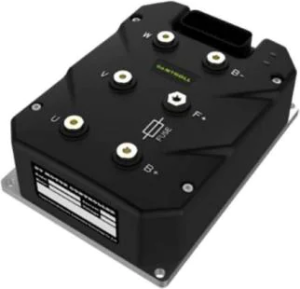
The Core Function of a Motor Starter
A motor starter is a combination of components built for a specific, critical task: enabling the safe startup of a motor. Its fundamental role is to switch a large electrical current on and off, typically using a contactor, and to provide protection against overcurrent conditions with an overload relay. The starter’s operation is binary; the motor is either connected to the full line power and running at a fixed speed, or it is disconnected and stopped. It does not manage the motor’s velocity or torque beyond the initial inrush current handling. This makes a starter a vital safety and isolation device, but not a tool for performance modulation.
The Expanded Capabilities of a Motor Controller
A motor controller, by comparison, has a broader and more dynamic function. Its purpose is not just to start the motor, but to actively manage its operation. A standard motor controller, such as a variable speed controller for AC motor, regulates the velocity, torque, and direction of rotation. It achieves this by modifying the power delivered to the motor—varying the voltage and frequency in the case of an AC motor controller. This allows for soft starts, precise speed adjustments, and complex motion profiles, functionalities far beyond the simple on/off capability of a starter.
The Variable Speed Controller as a Defining Example
The distinction becomes clearest when examining a variable speed controller for AC motor. This device is a type of motor controller that incorporates the starting function but extends it significantly. Instead of applying full line power immediately, it ramps up the frequency and voltage, starting the motor smoothly and eliminating damaging current spikes. During operation, it can adjust the motor’s speed to match the exact demands of the process, achieving substantial energy savings. While a basic starter is a switch, a variable speed controller for AC motor is a performance management system.
Understanding this distinction is crucial for specifying the correct equipment. A motor starter is sufficient for applications where a motor only needs to run at a fixed speed and requires basic overload protection. However, for processes that benefit from speed regulation, soft starting, torque control, or energy efficiency, a full motor controller is the necessary solution. In many modern systems, the capabilities of a starter are integrated within the broader architecture of the motor controller. We design our systems with this functional hierarchy in mind, ensuring that the specified component—whether a simple starter or an advanced variable speed controller for AC motor—precisely matches the operational requirements for both safety and performance.