

Evaluating the financial justification for a high-efficiency PMSM requires a detailed look beyond the initial price tag. These motors, which use permanent magnets embedded in the rotor, present a different cost and performance profile compared to traditional AC induction motors. The central question isn’t merely about upfront cost, but the specific operational parameters of your application. We at Santroll approach this query with a systematic analysis, weighing the technical advantages of a high-efficiency PMSM against the total cost of ownership. The answer depends heavily on duty cycles, energy costs, and performance demands.
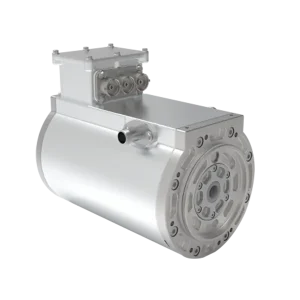
Operational Principles of the PMSM Motor
The core advantage of a PMSM motor lies in its fundamental design. The permanent magnets generate a constant magnetic field without requiring electrical current from the stator. This eliminates the rotor electrical losses, known as I²R losses, which are inherent in induction motors. Consequently, a high-efficiency PMSM typically operates with a higher power density and a flatter efficiency curve across a wide speed range, especially at partial loads. For applications with variable speeds or frequent start-stop cycles, this characteristic translates to consistent energy savings where an induction motor would see significant efficiency drop-off.
Calculating the Total Cost of Ownership Framework
The investment analysis must shift from purchase price to a comprehensive cost model. This model factors in the annual energy consumption, local electricity rates, expected motor runtime, and maintenance expenses. While a PMSM motor often carries a higher initial cost due to magnet materials, the reduced electrical losses lower continuous energy draw. In a high-utilization scenario—for instance, a pump or compressor running thousands of hours per year—the cumulative energy savings can offset the price premium within a predictable payback period. Additional savings can come from reduced thermal stress, potentially lowering cooling requirements and extending bearing life.
Matching Motor Technology to Application Demands
Not every application realizes the full benefits of this technology. The suitability of a high-efficiency PMSM is pronounced in systems requiring precise speed control, high torque at low speeds, or frequent operation below rated load. Conversely, for simple, fixed-speed applications with minimal daily operation, the extended payback period may not justify the investment. Furthermore, environmental factors matter; very high ambient temperatures can risk demagnetization. A rigorous assessment of load profiles, control complexity, and operating environment is therefore essential. We guide this evaluation to determine if the performance characteristics align with the system’s mechanical and control requirements.
The value proposition of a high-efficiency PMSM is fundamentally tied to its operational context. Its superior efficiency and control performance offer clear financial and technical benefits in the right setting, particularly where energy consumption is a major cost driver. The decision requires moving beyond simple specification comparisons to an analysis of the entire drive system’s duty cycle and lifecycle costs. Santroll’s engineering perspective focuses on this holistic view, ensuring that a motor recommendation—whether a PMSM motor or an alternative—is grounded in the specific economic and technical realities of the application it will serve.