

Fulfillment of a U.S. defense contract demands a component selection process governed by stringent standards and documented traceability. The choice of a bldc motor controller for these applications moves beyond commercial performance metrics into the realm of assured reliability and regulatory compliance. We at Santroll engage with this sector by aligning our motor controller development and production with the rigorous protocols that defense systems require.
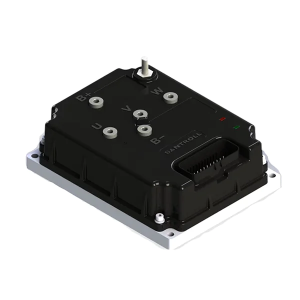
Establishing Compliance and Documentation Protocols
The foundational step in selection is verifying adherence to specific military standards and export controls. A bldc motor controller destined for defense use must be designed to meet relevant MIL-STD specifications for environmental conditions, such as temperature, shock, and vibration (e.g., MIL-STD-810). It must also comply with electromagnetic interference requirements (e.g., MIL-STD-461). Furthermore, documentation is critical. The entire supply chain, from raw materials to final assembly, must be traceable. A motor controller supplier must provide evidence of this pedigree, often through detailed test reports and a commitment to ITAR (International Traffic in Arms Regulations) compliance, ensuring all components are sourced and handled according to U.S. regulations.
Evaluating Performance Under Extreme Environmental Stress
Performance specifications for a defense-grade bldc motor controller are defined by the operational envelope of the end platform. This involves analyzing parameters beyond typical industrial duty cycles. The motor controller must deliver specified torque and speed outputs across an extreme temperature range, from arctic cold to desert heat. Its construction must withstand high levels of shock and vibration without mechanical failure or electrical discontinuity. For systems requiring precision, the bldc motor controller must maintain stable control loop performance despite these dynamic physical stresses. Selection involves a thorough review of validated test data from the supplier, confirming the unit has been proven under conditions that mirror or exceed the contract’s requirements.
Integrating System Security and Cybersecurity Measures
In modern defense systems, the motor controller is an integrated node within a larger networked architecture. This introduces requirements for functional security and cybersecurity. From a functional standpoint, the motor controller must include built-in protections against fault conditions that could lead to system failure. From a cybersecurity perspective, if the bldc motor controller features a digital communication interface, it must be designed to resist unauthorized access or malicious code injection. This can involve secure boot processes, encrypted communications, and role-based access control. These features are no longer optional for a motor controller operating in a connected battlespace or critical infrastructure.
The selection of a bldc motor controller for a defense contract is a multi-faceted evaluation of compliance, ruggedization, and security. It necessitates a supplier partnership based on transparency and a shared commitment to uncompromising standards. Our engineering and quality management systems at Santroll are structured to support these demands, providing motor controller and bldc motor controller solutions that meet the technical and procedural rigor essential for U.S. defense applications.