

Identifying the correct motor controller for an application is a fundamental engineering exercise that balances performance requirements with operational constraints. This selection dictates the efficiency, control, and longevity of the entire motion system. At Santroll, we base our recommendations on a set of core principles that ensure the motor controller, including a specialized AC motor speed controller, is not just compatible but optimal for the intended duty.
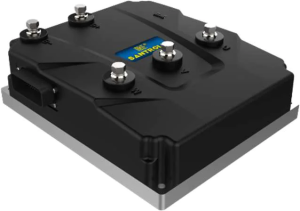
Align the Controller with Motor Type and Load Dynamics
The primary principle is alignment between the motor controller and the motor’s inherent characteristics. The fundamental technology must match; an AC induction motor requires an AC motor speed controller, while a brushless DC motor needs a different drive architecture. Beyond this, the load profile demands careful analysis. A consistent, steady load presents a different set of challenges than a dynamic load with frequent cycles of high torque. The motor controller must be specified to deliver the required current and power to manage the motor’s torque-speed curve under the actual load conditions, ensuring reliable operation without nuisance tripping or thermal overload.
Prioritize the Required Control Methodology
The needed precision of control directly influences the type of motor controller specified. Applications can be divided by their need for open-loop or closed-loop control. A simple fan or pump might perform adequately with a basic open-loop ACmotor speed controller that operates without feedback. However, applications where load changes directly impact speed or where precise position holding is critical necessitate a closed-loop motor controller. This system uses feedback from an encoder or resolver to continuously adjust output, maintaining the target speed or position despite load variations. This choice fundamentally affects system cost, complexity, and ultimate performance.
Validate Environmental and Integration Specifications
A motor controller must be engineered to endure its operating environment. This principle involves verifying two key specifications: the Ingress Protection (IP) rating and the thermal management design. A unit installed in a clean control cabinet may have a low IP rating, while a motor controller mounted on a machine frame likely requires IP65 or higher to resist dust and moisture. Thermally, the AC motor speed controller must have a known capacity to dissipate heat within the ambient temperature range of its location. Furthermore, the communication interfaces—from basic analog signals to digital fieldbuses—must integrate seamlessly with the overarching machine control system to enable data exchange and command execution.
Adhering to these core principles during the specification process systematically de-risks the integration of a motor controller. It shifts the selection from a simple component purchase to a strategic design decision. Our development process at Santroll for both standard motor controller units and advanced AC motor speed controller solutions is guided by these same principles, ensuring we provide drives that deliver predictable performance and durability in real-world applications.