

To guarantee both operating performance and long-term mechanical integrity, it is necessary to select a motor with sufficient torque. Failure of the system or poor use of energy can result from an inaccurate specification. Santroll shall lay out a systematic approach to determining an electric motor’s torque requirements, paying special attention to the rigorous uses of motors used in marine boats.
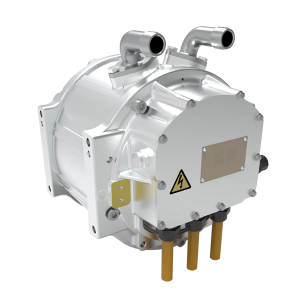
Establishing the Core Power-to-Torque Relationship
The fundamental connection between power, speed, and torque is defined by a standard physical equation. The formula Torque (T) = (9.5488 × Power (P)) / Speed (N) serves as the primary calculation tool. In this relationship, power is expressed in kilowatts (kW), and speed is in revolutions per minute (RPM). The result, torque, is given in Newton-meters (Nm). For instance, an electric motor rated for X kW at Y RPM will generate Z Nm of torque. This calculation provides the continuous torque output required to maintain a specific load under steady-state conditions, forming the baseline for any motor selection.
Incorporating Starting and Peak Operational Demands
The baseline torque value represents only one part of the performance picture. Many applications, particularly those involving high-inertia loads, require significantly higher torque to initiate motion from a standstill. This is known as starting torque or breakaway torque. Furthermore, equipment often experiences transient spikes in load, necessitating an electric motor capable of delivering a higher peak torque for short durations without stalling. For boat motors, this is a paramount consideration; the torque required to accelerate a propeller and overcome initial water resistance is substantially greater than the torque needed to maintain a constant cruising speed.
Evaluating the Torque-Speed Curve for System Integration
A Motor’s capability is fully described by its torque-speed curve, which illustrates how its torque output changes across its operational speed range. Understanding this curve is essential for confirming that the electric motor can handle the load not just at one point, but throughout its entire acceleration and operational profile. For boat motors, this involves matching the motor’s curve with the load curve of the specific propeller. A mismatch can result in an inability to reach the desired RPM or operation in an inefficient region, leading to excess heat and energy consumption. The correct pairing ensures the motor operates within its optimal performance envelope.
Accurate torque calculation is a prerequisite for designing a reliable and efficient drive system. It moves the selection process beyond simple power ratings and into a detailed analysis of the load’s dynamic characteristics. By applying the fundamental formula and then carefully considering the distinct requirements for startup, peak load, and the full torque-speed relationship, you can specify an electric motor with confidence. This rigorous approach is especially crucial for marine boat motors, where the operating environment imposes unique and rigorous demands on the entire propulsion system.