

Torque regulation is a fundamental capability of advanced motor control, moving beyond simple speed management to direct manipulation of mechanical force. We at Santroll engineer systems where precise torque control is critical for applications like tensioning, pressing, or overcoming initial inertia. A motor controller achieves this by continuously monitoring and actively manipulating the current supplied to the motor. Since the torque output of a motor is directly proportional to the current flowing through its windings, this current becomes the primary variable for control. The motor controller establishes a torque setpoint and uses a closed-loop system to ensure the motor’s current, and thus its torque, matches this command.
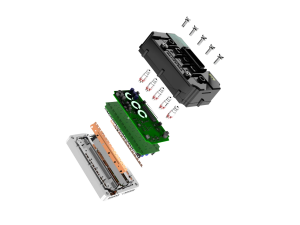
Continuous Current Measurement as Feedback
The process begins with real-time measurement. The motor controller uses internal sensors, such as shunt resistors or Hall-effect sensors, to precisely measure the current flowing from the inverter stage to the motor phases. This measured current value is constantly fed back to the controller’s processing unit. It serves as the primary feedback signal for the torque control loop. The controller compares this actual current value against the desired current value derived from the torque setpoint. Any discrepancy between these two values generates an error signal. This continuous monitoring allows the motor controller to react instantly to load changes that would affect current draw and, consequently, torque output.
The Role of the Current Regulator and PWM Adjustment
The core of torque regulation resides in the current regulator, a specialized proportional-integral (PI) control algorithm within the motor controller’s software. The error signal generated by the current comparison is processed by this regulator. If the measured current is too low, the regulator acts to increase it; if it is too high, the regulator acts to decrease it. The output of this current regulator directly dictates the necessary adjustments to the Pulse-Width Modulation (PWM) signals that drive the inverter’s power transistors. By modifying the PWM duty cycle, the motor controller changes the average voltage and current applied to the motor windings, forcing the actual current to align with the commanded value. For an AC motor speed controller, this involves complex transformations to manage AC current waveforms effectively.
Implementation in Speed and Torque Control Modes
A motor controller typically operates in different modes, with torque regulation being a distinct mode from speed control. In a pure torque control mode, the torque setpoint is the primary command, and the motor’s speed becomes a dependent variable, allowed to fluctuate based on the load. Conversely, in speed control mode, the motor controller uses a speed regulator that outputs a torque command to achieve the desired speed. This means that even in speed control, the inner torque control loop we described is actively working to ensure the motor produces the exact torque needed to maintain that speed under varying loads. This layered control structure is what gives a modern AC motor speed controller its stability and responsiveness.
The ability to regulate torque is therefore a function of precise current control and sophisticated internal processing. The motor controller acts as a dynamic governor, not for speed, but for mechanical force. This capability enables machines to handle delicate materials with consistent tension or to apply a specific force in a pressing operation. The underlying principle remains the direct relationship between current and torque, managed through continuous measurement and high-speed adjustment of power output. This level of control provides machine designers with the tools to build equipment that operates with both power and finesse, ensuring consistent process results regardless of variations in the mechanical load.