

Brushless DC (BLDC) motors represent a shift in design philosophy, replacing electromechanical commutation with an electronic system. We at Santroll, as an electric motor manufacturer, utilize this technology for its reliability and performance characteristics. The operation hinges on a coordinated interplay between permanent magnets, fixed windings, and a digital controller. This architecture is central to our development of precision custom electric motors for demanding applications.
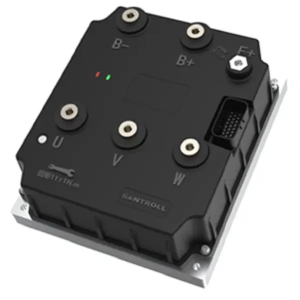
Electronic Commutation and Stator Windings
The fundamental difference lies in the commutation method. A BLDC motor eliminates the physical brushes and commutator found in traditional designs. Instead, the motor features a stationary stator with multiple copper windings. An external electronic controller, which is integral to the system, sequentially energizes these windings. This controller acts as a sophisticated switch, delivering current to the correct windings at the exact moment to generate a rotating magnetic field. The precision of this electronic switching is a key focus in our work as an electric motor manufacturer, as it directly determines the motor’s smoothness and efficiency.
Permanent Magnet Rotor and Torque Generation
Within the stator sits a rotor that contains powerful permanent magnets. The rotating magnetic field generated by the stator windings interacts with the fixed magnetic field of the rotor magnets. According to fundamental magnetic principles, opposite poles attract and like poles repel. The controller’s precise sequencing of power to the windings creates a magnetic force that pulls the rotor around, resulting in continuous rotation. The strong permanent magnets allow for a high torque-to-size ratio, a feature we often leverage when engineering custom electric motors for space-constrained applications.
The Role of Feedback in a Closed-Loop System
For the controller to energize the windings at the correct time, it must know the rotor’s precise position. This is achieved through sensors, typically Hall-effect sensors embedded in the stator, which provide real-time positional data to the controller. This creates a closed-loop system where the controller constantly adjusts the output to the stator based on the rotor’s feedback. This continuous monitoring allows for exceptional control over speed and torque. The ability to integrate this feedback loop is essential for producing high-performance custom electric motors that require dynamic response to variable loads.
The brushless DC motor operates on a principle of electronic precision, trading mechanical sliding contacts for digital control. This results in a device with a longer operational life, reduced electromagnetic interference, and higher efficiency. For our team at Santroll, mastering this technology is fundamental to our role as an electric motor manufacturer. The brushless design provides the foundational flexibility needed to create effective custom electric motors, enabling us to meet specific requirements for torque, speed, and physical configuration in modern industrial systems.