

A fundamental question in industrial motion control concerns the method for adjusting the velocity of an AC induction motor. The operational principle of these motors links their rotational speed directly to the frequency of the AC power supply and the number of magnetic poles in the stator. This relationship is fixed when connected to a standard mains supply, which provides power at a constant frequency. To achieve variable speed operation, the electrical input to the motor must be altered. This is the specific function of a variable speed controller for AC motor systems, which actively manipulates the power characteristics to govern rotational speed with precision.
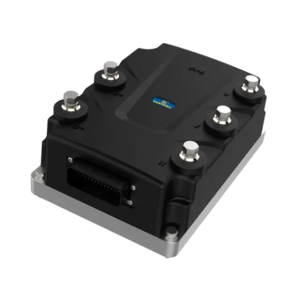
The Role of the Variable Frequency Drive (VFD)
The primary and most efficient method for varying AC motor speed involves using a Variable Frequency Drive (VFD), which acts as a sophisticated motor controller. This device electronically converts the incoming fixed-frequency AC power into a variable-frequency output. The core principle, known as V/f control, maintains a constant voltage-to-frequency ratio. As the output frequency from the variable speed controller for AC motor systems decreases, the output voltage is proportionally lowered. This is necessary to prevent the motor from entering magnetic saturation, which would lead to excessive current draw and overheating. By simultaneously managing frequency and voltage, the VFD enables stable, low-speed operation with sufficient torque, which was a historical challenge with simpler control methods.
Internal Mechanism of a Modern AC Drive
Inside a typical variable speed controller for AC motor units, a three-stage process facilitates this power conversion. The first stage rectifies incoming AC power into DC. The second stage, or DC bus, filters and smoothens this rectified power. The third and most critical stage is the inverter, which uses a configuration of insulated-gate bipolar transistors (IGBTs) to synthesize a new AC waveform. These IGBTs switch on and off thousands of times per second, creating a pulse-width modulated (PWM) signal that mimics a sinusoidal AC waveform of the desired frequency. The motor controller’s logic dictates the switching pattern, effectively generating a clean, variable-frequency power source that the AC motor can follow accurately.
Practical Outcomes and System Benefits
Implementing a variable speed controller for an AC motor yields significant advantages beyond simple speed adjustment. One of the most substantial is reduced energy consumption. For centrifugal loads like pumps and fans, which follow affinity laws, a small reduction in speed results in a large decrease in power requirement. This motor controller also provides a soft-start capability, gradually ramping the motor up to operating speed instead of subjecting it to a full-voltage startup. This inrush current mitigation reduces stress on both the motor and the electrical infrastructure, leading to lower maintenance costs and extended equipment service life.
The ability to vary an AC motor’s speed is grounded in the precise electronic control of its electrical input. At Santroll, we have engineered our variable speed controller for AC motor applications to make this critical control possible, transforming a fixed-speed device into a highly adaptable component. This technology provides a direct path to achieving superior operational efficiency, enhanced process control, and extended mechanical longevity. For any application where flow, pressure, or material handling rates need adjustment, the implementation of a Santroll motor controller is the established and effective solution. It represents the Santroll convergence of advanced power electronics and practical mechanical need.