

Original Equipment Manufacturers face persistent challenges in system integration, where combining discrete components into a functional whole consumes significant engineering resources. The traditional method of sourcing a separate BLDC motor and a compatible motor controller creates a multi-stage assembly process. We at Santroll see integrated BLDC controller-motor units as a direct response to this complexity. These products combine the motor, the drive electronics, and often essential feedback into a single, pre-engineered package. This consolidation shifts the design focus from component interoperability to direct application implementation, simplifying the path from prototype to production.
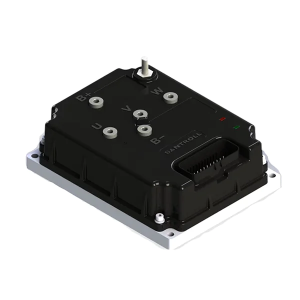
Consolidated Sourcing and Reduced Component Count
A primary simplification comes from the supply chain and mechanical assembly perspective. Instead of managing separate suppliers for the motor, the BLDC motor controller, sensors, and connectors, an OEM engages with a single source. This integration drastically reduces the number of individual parts that must be specified, purchased, stocked, and handled on the assembly line. The physical installation is simplified to mounting the unit and connecting power and communication cables. This reduction in component interfaces also minimizes potential points of failure, such as loose wiring between a discrete motor controller and the motor, which can improve overall system reliability.
Elimination of Controller-Motor Compatibility Analysis
A substantial engineering hurdle removed by integration is the electromagnetic matching process. Designing with a separate BLDC motor controller requires ensuring the controller’s voltage, current, and switching characteristics are perfectly aligned with the motor’s parameters. This involves complex verification of the PWM frequency, current loop tuning, and protection setting coordination. In an integrated unit, the BLDC motor controller is pre-matched and optimized for the specific motor it is attached to at the factory. This pre-engineering guarantees performance, eliminates tuning guesswork, and ensures that the system operates at its designed efficiency from the first power-on.
Simplified Interfacing and Rapid System Commissioning
The interface for an integrated unit is designed for clarity and speed. OEM engineers interact with a single set of terminals for power and a unified port for command signals, such as PWM and direction or a digital bus like CAN. This contrasts with the need to wire and configure two separate devices. Furthermore, integrated units often come with pre-loaded software profiles for common operating modes, such as speed control or torque regulation. This allows for faster commissioning and reduces the software development burden on the OEM’s team, as the fundamental control loops are already stabilized and validated within the packaged BLDC motor controller.
The architectural shift toward integrated BLDC controller-motor units represents a move up the value chain for OEMs. It transfers the responsibility for electromagnetic performance and hardware interoperability from the OEM’s design team to the component manufacturer. This allows OEM engineers to allocate more resources to developing the unique features of their machinery rather than solving underlying motion control integration puzzles. The result is a reduction in design risk, acceleration of time-to-market, and a more streamlined manufacturing process. For companies focused on innovation and efficiency, this integrated approach provides a solid foundation for building competitive and reliable products.