

A common question in machine design involves the allocation of motor controllers—specifically whether each motor requires its own dedicated unit. The answer is not a simple yes or no, but a consideration of system requirements, operational independence, and functional goals. We at Santroll approach this from a system architecture perspective. The decision hinges on whether the application demands individual control over each motor’s speed, torque, or direction. A single motor controller can sometimes manage multiple motors, but this configuration introduces specific operational compromises that must be carefully evaluated against the project’s objectives.
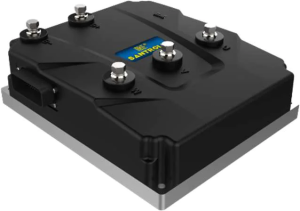
Scenarios for a Shared Motor Controller Configuration
Using one motor controller to operate multiple motors is technically feasible under specific conditions. This approach is most applicable when identical motors must operate at the exact same speed and direction simultaneously, and when they are driving a mechanically coupled load. A classic example is multiple conveyor belts moving a product in a continuous, synchronized line. In such a case, a single, appropriately sized AC motor controller can power all motors in the group. However, this setup has inherent limitations. A fault in one motor, such as a seized bearing, will affect the entire group. Furthermore, the controller cannot compensate for individual load variations on each motor, which can lead to some motors operating at different slip rates despite receiving the same power.
The Case for Individual Motor Controller Allocation
Assigning a dedicated motor controller to each motor provides a significantly higher degree of operational flexibility and protection. This architecture allows for independent control over every motor’s speed, acceleration, and rotational direction. In complex machinery where different sections must coordinate but operate at varying speeds, individual motor controllers are necessary. For instance, a packaging machine may require a feeder, a filler, and a sealer to run at precisely different rates. An individual AC motor controller per motor enables this coordinated yet independent operation. It also localizes faults; if one motor fails, its dedicated controller can shut down without affecting the others, minimizing overall system downtime.
Evaluating Cost, Complexity, and Functional Outcome
The choice between shared and individual motor controllers involves a balance between initial investment and long-term operational capability. While a shared system may have a lower upfront hardware cost, it sacrifices control granularity and system resilience. An architecture with individual motor controllers represents a higher initial component cost but delivers precise, independent control and easier troubleshooting. This investment in distributed control often results in a more flexible, reliable, and efficient machine. For applications where process adjustment, diagnostic clarity, and uptime are priorities, the dedicated motor controller per motor model frequently provides a greater return on investment.
The allocation of motor controllers is a fundamental design decision that shapes a machine’s capabilities and limitations. A shared AC motor controller suits simple, synchronized systems where operational parameters are static and identical. For dynamic applications requiring independent motion profiles, fault containment, and process optimization, a dedicated motor controller for each motor is the necessary and effective path. The correct choice is determined by a clear analysis of the mechanical requirements and the desired level of control within the overall system. This strategic decision directly influences the machine’s performance, adaptability, and long-term cost of ownership.