

A point of discussion in motion system design involves the specific roles of a motor controller and a driver, and whether both are necessary for operation. These terms are sometimes used interchangeably, but they describe distinct functional blocks with different purposes. In a technical context, the motor controller is the command center that processes logic and computes required actions, while the driver is the power stage that executes these commands. Understanding this distinction is key to specifying components for an AC motor controller system. The necessity for both depends on the system’s architecture and the level of performance required.
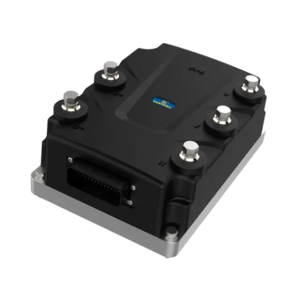
The Command and Power Stages in System Architecture
The motor controller functions as the brain of the operation. It receives high-level instructions from a central source, such as a programmable logic controller (PLC) or a human-machine interface (HMI). Its tasks include processing speed and position commands, managing closed-loop control algorithms, and generating the low-voltage signal patterns needed for the desired motion profile. The driver, conversely, acts as the muscle. It is an amplifier that receives the low-power signal from the motor controller and delivers the high-current, high-voltage power necessary to physically move the motor. In many modern AC motor controller units, these two elements are integrated into a single housing, creating a compact and optimized device.
Integrated Units Versus Discrete Component Systems
For a vast number of applications, an integrated unit that combines the control and drive functions is the standard and most efficient solution. A typical Santroll AC motor controller is one such device; it contains the logic circuits to determine the output frequency and the power electronics (IGBTs) to generate the waveform that drives the motor. This integration simplifies design, reduces wiring, and ensures compatibility. However, in highly specialized or powerful systems, these functions can be separated. A discrete motor controller might send signals to multiple, distributed high-power drivers. This architecture is common in complex machinery where centralized intelligence must manage several powerful axes of motion independently.
Considerations for System Specification and Performance
The decision to use an integrated AC motor controller or a separate controller-and-driver system hinges on application demands. Integrated units offer a balance of performance, cost-effectiveness, and simplicity, making them suitable for most industrial applications like pumps, fans, and conveyors. A discrete architecture provides maximum flexibility and power handling for demanding applications like precision multi-axis robotics or heavy-duty extruders. Specifying a separate motor controller and driver allows engineers to select a specialized control algorithm and pair it with a driver capable of delivering exceptionally high current, a need that exceeds the scope of standard integrated units.
The functional separation between a motor controller and a driver is a fundamental concept in motion system engineering. While integrated devices effectively combine these roles for common applications, understanding the distinct purpose of each allows for more informed system design. An integrated AC motor controller provides a complete, optimized solution for most variable-speed needs. For applications demanding exceptional power, specialized control, or distributed power stages, specifying a discrete motor controller and separate driver becomes a necessary approach. The correct configuration is determined by weighing the requirements for processing complexity, power delivery, and overall system scalability against the benefits of a pre-integrated solution.