

A common question we encounter from design engineers concerns the flexibility of motor systems. Many assume that speed control is a universal feature, but the reality is more structured. The capacity for variable speed operation is not an inherent property of every electric motor; it is a function of the motor’s design and, critically, the control system paired with it. As a seasoned electric motor manufacturer, Santroll see this as a fundamental distinction that impacts system architecture from the outset.
Inherent Speed Limitations in Standard Designs
Certain motor types are engineered for a fixed operational speed. A classic example is the standard AC induction motor, which runs at a speed largely determined by the frequency of the AC power supply and the number of poles in its construction. Connected directly to a mains power supply, such as 50 Hz or 60 Hz, its speed is relatively constant. Attempting to alter its speed by simply reducing the voltage is inefficient and results in a significant loss of torque, making this approach impractical for most industrial applications. For systems requiring a single, consistent operating speed, these motors offer a robust and cost-effective solution. Understanding this distinction is a primary consideration in our work as a motor manufacturer.
The Role of Specialized Motor Designs
Some motor architectures are inherently more adaptable to speed variation. Brushed DC motors, for instance, offer a relatively linear relationship between the applied voltage and their rotational speed, making them straightforward to control. However, this comes with the maintenance considerations of brushes and commutators. Modern solutions often lean towards brushless DC (BLDC) motors and certain AC motor designs like permanent magnet AC motors. These types are constructed with the expectation of being paired with an external controller. Their internal design provides the necessary feedback and magnetic characteristics that allow for precise control over a wide speed range, a feature we frequently leverage for custom solutions.
Electronic Control as the Enabling Factor
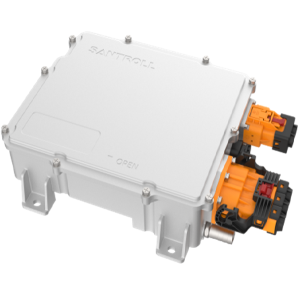
For motors that do not inherently support variable speed, the solution often lies in external electronics. The Variable Frequency Drive (VFD) is the key technology for controlling standard AC induction motors. A VFD works by converting the incoming AC power to DC, and then synthesizing a new AC output with variable voltage and, most importantly, variable frequency. This allows the motor’s speed to be precisely adjusted. Similarly, brushless DC motors require an electronic speed controller (ESC) that dynamically switches power to the motor’s windings. The selection of the correct controller is as crucial as the motor itself, a point we emphasize in our collaborations as an electric motor manufacturer.
The question of variable speed capability is therefore not a simple yes or no. It is a systems-level question that depends on the synergy between the motor’s fundamental design and the sophistication of its drive electronics. For an engineer, the decision pathway involves first defining the required speed range and torque characteristics, then selecting a motor type that can physically achieve this, and finally specifying the controller that unlocks that performance. Our role as a motor manufacturer is to provide clarity on these options, ensuring that the selected combination delivers both the required motion profile and the necessary operational reliability for the application.