

Operational uptime and maintenance costs are primary concerns for managers of off-highway equipment fleets. We at Santroll investigate whether the integration of an advanced AC controller can directly influence these metrics. The evidence suggests that modern motor control solutions are not merely about performance; they are engineered to mitigate the root causes of mechanical wear and electrical failure. This approach to design can alter the maintenance profile of heavy-duty equipment.
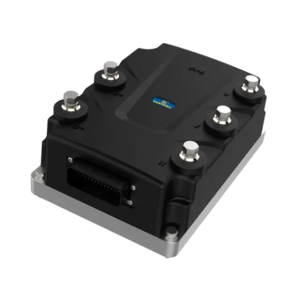
Mitigating Mechanical Shock through Controlled Acceleration
A significant source of drivetrain wear originates from uncontrolled startup. Direct-on-line starting imposes immediate, high torque on gears, axles, and hydraulic pumps. This mechanical shock stresses components, leading to fatigue and premature failure of couplings, bearings, and transmission elements. An AC controller addresses this by providing programmable soft-start and soft-stop functionalities. This feature allows the motor to ramp up and down smoothly, gradually applying torque to the system. By eliminating the violent jerks associated with direct startups, the motor controller directly reduces physical stress on the drivetrain, extending the service life of these critical mechanical components and delaying associated maintenance events.
Optimizing Thermal Management for Electrical Longevity
The health of an electric motor is closely tied to its operating temperature. Persistent overheating is a primary cause of insulation breakdown and bearing grease failure. Traditional resistance-based speed control methods are inefficient, converting excess energy directly into heat. In contrast, a modern AC controller operates on a principle that maintains high efficiency across a wide speed range. By providing the motor with a clean, sinusoidal current, these motor control solutions minimize electrical losses and I²R heating within the windings. This superior thermal management keeps the motor operating within its ideal temperature range, which preserves insulation integrity, extends bearing life, and reduces the frequency of maintenance interventions related to motor overhaul or replacement.
Providing Diagnostic Data for Proactive Maintenance
Beyond physical protection, sophisticated motor control solutions introduce a data-driven element to equipment management. An advanced AC controller continuously monitors operational parameters such as current draw, operating hours, and thermal history. It can detect abnormal patterns, such as gradual increases in current consumption that may indicate a growing mechanical bind or worn component. This data can be communicated to a central fleet management system, providing maintenance teams with actionable intelligence. Instead of relying on a fixed-time maintenance schedule or reacting to a breakdown, teams can shift to a condition-based approach. This allows for parts to be replaced or systems to be serviced precisely when needed, optimizing maintenance resources and preventing unexpected downtime.
The function of an AC controller in off-highway applications extends far beyond basic speed regulation. It acts as a protective system for both mechanical and electrical components. Through managed torque, improved efficiency, and diagnostic capabilities, these motor control solutions directly address the primary drivers of maintenance. The result is a demonstrable reduction in unscheduled downtime and an extension of component lifecycles. For operations focused on total cost of ownership, the investment in advanced motor control solutions represents a strategic decision for improving asset reliability and operational predictability.